

AI's Connective Tissue: Reflecting on DustPhotonics' $1.2B Journey
DustPhotonics’ acquisition by Credo has been a particularly meaningful milestone for us at Greenfield. We had the privilege of leading DustPhotonic’s Series B and, in the process, partnering with our longtime friend and semiconductor pioneer, Avigdor Willenz. Avigdor has a rare ability to see around corners in infrastructure, and when he gets excited about a technical inflection point, we pay close attention.
Dustphotonics was one of those moments.
Betting on a Breakthrough
When we first got to know the DustPhotonics team, the company already had some early products in the transceiver space. But what really caught our attention was something far more important: an early but tangible breakthrough in silicon photonics, long considered the holy grail of optical interconnect.
For years, the datacenter industry had been pushing toward a future where optical communication could be tightly integrated into silicon, unlocking massive gains in speed, cost, efficiency, and scalability. But bridging that gap, from theory to production-ready systems, proved incredibly difficult.
DustPhotonics was among the first to truly crack it.
The AI Wave was Coming (Before it was Obvious)
At the time, ChatGPT hadn’t yet been released. But through our deep involvement across the AI ecosystem, one thing was already becoming clear: compute demand was about to increase dramatically, and with it, the need to move data faster than ever before.
It wasn’t obvious exactly when this shift would hit, or how big it would become. But the direction was unmistakable, and this technology would sit at the center of it.
From Technical Bet to Mission-Critical Infrastructure
As models grew larger and compute clusters expanded, a new bottleneck emerged: moving data between GPUs, networking layers, and storage systems. It wasn’t just about compute anymore, it was about connectivity.
DustPhotonics’ technology now sits at the heart of some of the world’s most demanding AI clusters, enabling the high-speed, low-latency communication required to make modern AI systems actually work. What started as a deep technical bet has evolved into a foundational layer, the connective tissue of the AI stack.
Building Ahead of the Curve
One of the things that stood out to us early on was how clearly the DustPhotonics team understood where the world was heading.
Long before “AI infrastructure” became a category, they were building for a future that required exponentially greater bandwidth. When the world was still deploying 100G speeds, they were already building for 1.6Tb and beyond. They weren’t reacting to demand- they were anticipating it.
The scale of deployment, the urgency from hyperscalers, and the centrality of interconnect performance to overall system throughput exceeded even the most optimistic expectations. And DustPhotonics didn’t just ride that wave. They helped shape it.
The Team Behind the Breakthrough
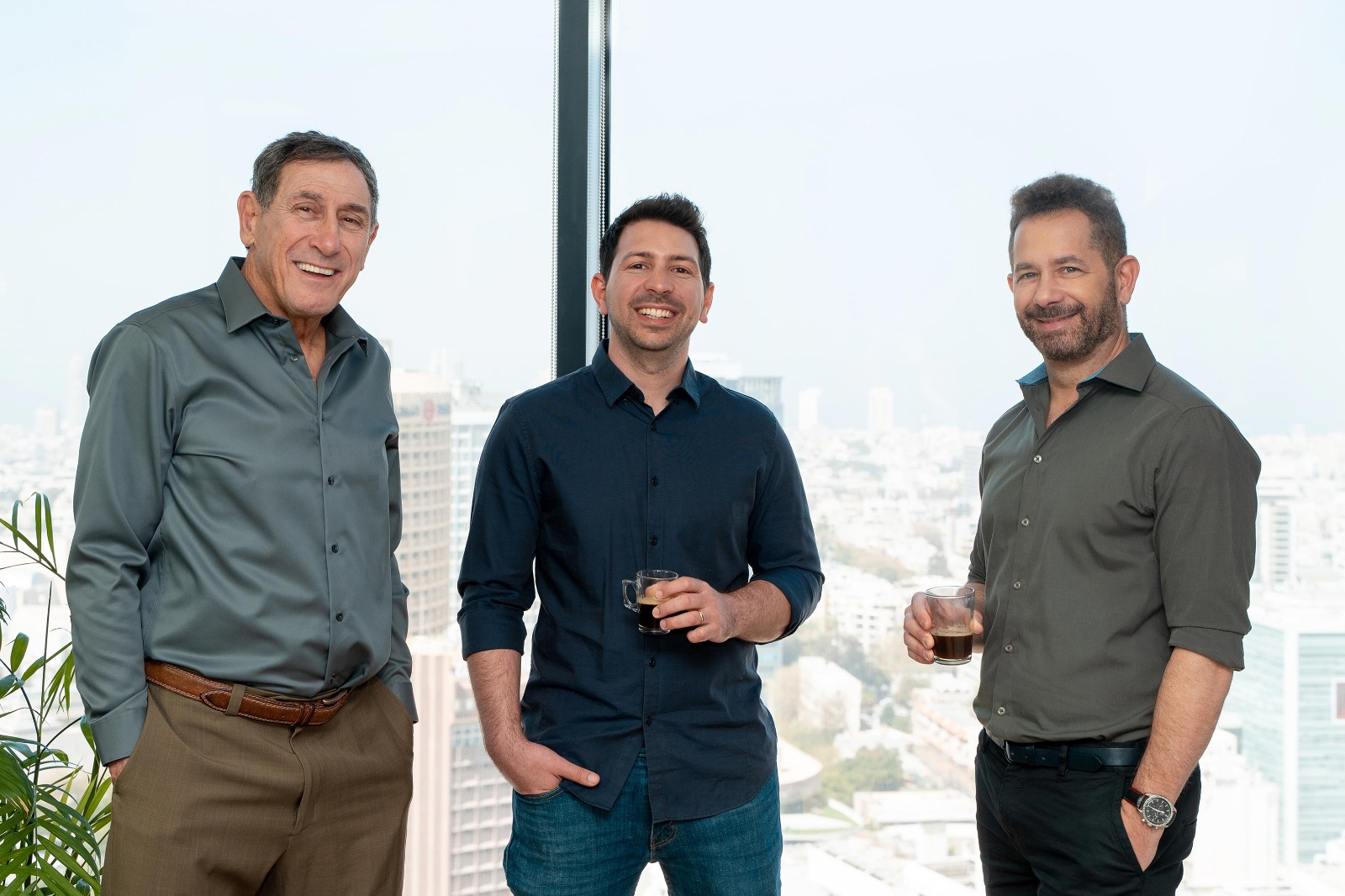
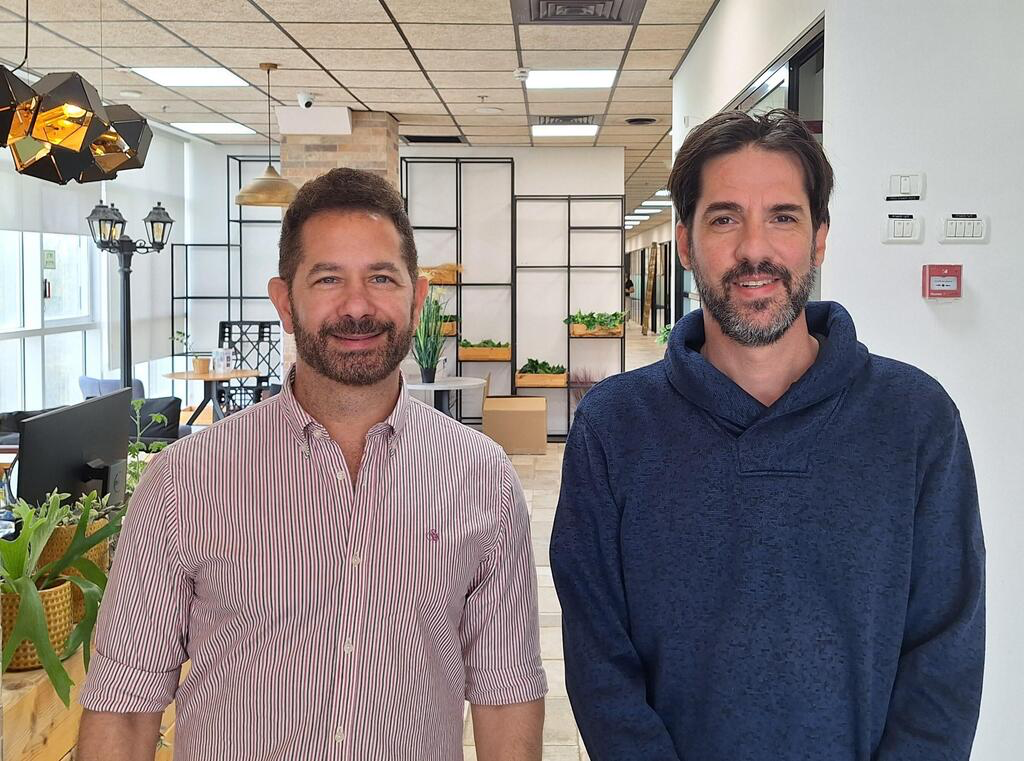
While building what has become one of the most important AI infrastructure companies in Israel, Ronnen, Yoel, and the team did so quietly, without fanfare, without headlines, and without distraction - just a relentless focus on the work.
In recent years, whenever I’d mention DustPhotonics in conversations, I would half-jokingly refer to it as “the best kept secret in Israel.” Those who knew, knew.
But for a long time, the company operated below the radar: heads down, solving hard problems that few others could.
Building in silicon photonics is not for the faint of heart. It requires navigating complex physics, manufacturing challenges, and long development cycles, all while staying tightly aligned with rapidly evolving customer needs. From early prototypes to production-grade systems, initial design wins to becoming a trusted partner in the most advanced AI deployments in the world, the journey has been anything but straightforward.
Ronnen’s leadership and product vision, alongside Yoel’s deep technical excellence, and Avigdor’s indispensable guidance and wisdom, created a foundation that is incredibly hard to replicate. That combination is a big part of what made this journey so special to be a part of.
A Defining Outcome, and a Signal for What’s Next
This acquisition is a tremendous outcome for the DustPhotonics team, their partners, and the broader ecosystem.
It also reflects something we believe deeply at Greenfield: the most transformative companies are often built at the intersection of deep technical insight and emerging market need, before that need is fully visible to the rest of the world.
DustPhotonics is a defining example.
And for us, it reinforces a pattern we’ve been building around for years. Across our portfolio, from Vast Data, to AAI, Torq, Coralogix, and others still unannounced, we’ve consistently backed teams solving foundational problems in the AI stack before the market fully recognized how critical those problems would become.
We’re incredibly proud to have been part of the DustPhotonics journey and grateful to Ronnen, Yoel, Avigdor, and the entire team for the partnership.