

Nine Months Later
In February, Josh and I wrote about why we invested in RobCo. The argument was simple. Western manufacturing is under more pressure than ever, and the automation that exists only works for factories with long, stable production runs. That gap, not tariffs or policy, is the real constraint on reshoring.
Last week RobCo crossed a $1 billion valuation, doubling in nine months. Greenfield is investing again, alongside Sequoia, Lightspeed, Kindred and Lingotto. We're also glad to welcome Cherry Ventures and European Tech Collective.
We don't add to positions lightly. We're doing it here because nine months of evidence has made the thesis stronger, and because what RobCo is building next goes beyond what we underwrote the first time.
The Thesis, Revisited
When we first wrote about RobCo, we focused on the small and mid-sized factories that make up most of Western manufacturing. Traditional industrial robots were built for long, stable runs, dedicated engineering teams and integrators on call. Those factories run high-mix production and change over often, so they learned to work around automation instead of relying on it.
RobCo flipped that model. Instead of redesigning the factory around the robot, the system adapts to the factory. Four standardized modules get reconfigured for different tasks and payloads, deployed in days and updated remotely, all through a Robotics-as-a-Service model with no upfront cost.
The part we cared about most was the learning loop. Every robot in the field generates operational data, and every remote fix teaches the fleet something. We wrote at the time that this data would become the foundation for more autonomy as AI improved. Nine months later, that is exactly where the company is heading.
What Changed
The biggest change is who is buying. In February we noted, almost in passing, that the same flexibility serving smaller factories was pulling in larger customers. That turned out to be the bigger story. High-mix production and frequent changeovers aren't only a small-factory problem. They show up on lines inside global manufacturers too, and those customers have far more lines to automate.
RobCo's customers today include BMW, Rosenberger and T-Systems. In June, Koenig & Bauer partnered with RobCo to bring its robots to K&B's own customers across the print industry, putting RobCo inside an equipment maker's channel instead of selling one factory at a time. Deals are getting larger as customers expand from a first cell to multiple lines and sites.
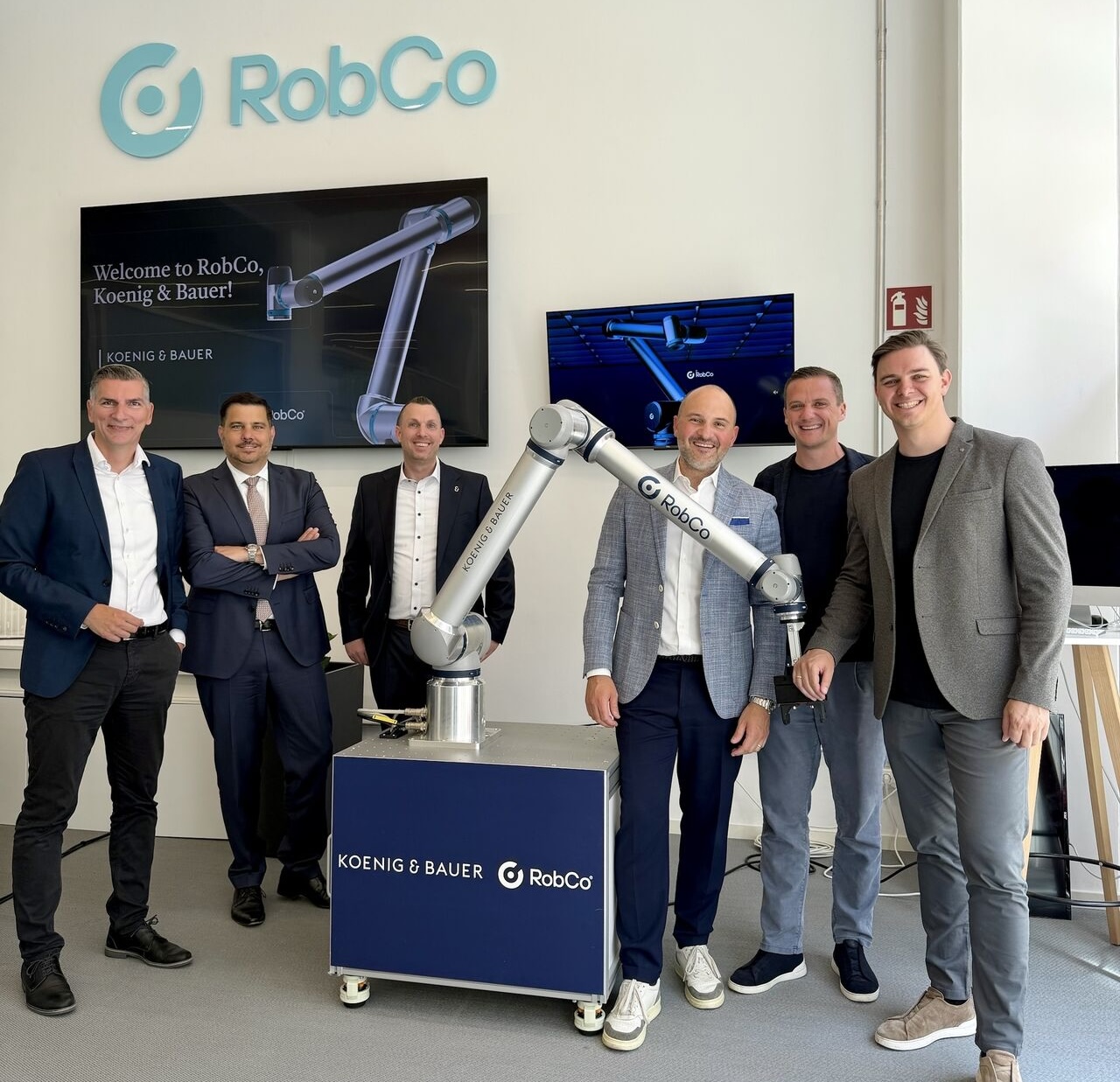
RobCo and Koenig & Bauer
When we invested, RobCo had hundreds of robots deployed across ten countries. Today the fleet is past 1,000 robots and more than 3.5 million operating hours. Every one of those hours feeds the same learning loop.
RobCo palletizing deployment
The US went from expansion plan to fastest-growing market. In January, RobCo was opening an office in San Francisco and an assembly facility in Austin. Customer operations now span more than a dozen states, with manufacturing and assembly in Austin and a dedicated lab in San Francisco.
Roman has also relocated to the US to lead the expansion himself. Few CEOs move to where the next phase of the company will be decided. It says a lot about how this team approaches execution.
The Physical Frontier
RobCo's line for last week's announcement is "The next frontier for AI is physical." We agree, and we think manufacturing is where that frontier gets tested first. Getting machines to perceive, reason and act reliably on a real factory floor is one of the hardest problems in AI.
Alfie is RobCo's answer. It is an autonomous industrial robot that combines perception, reasoning and execution, built for the high-mix, unstructured, safety-critical work that has defeated traditional automation for decades. It goes straight at the gap we wrote about in February.
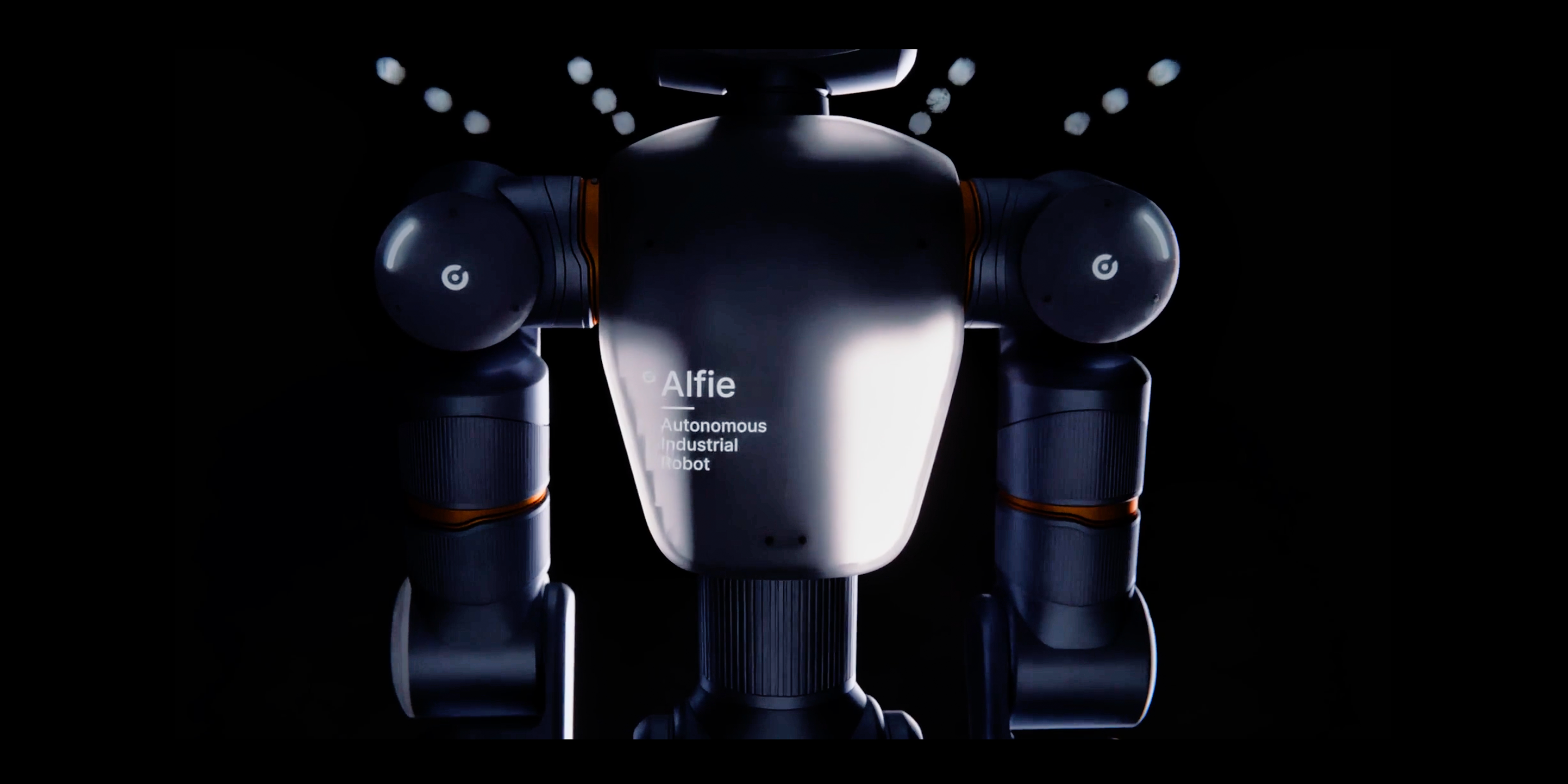
Alfie, from RobCo
What gives us confidence is that Alfie isn't starting from zero. It builds on a fleet already running in production, the data that fleet has collected, and a team that has spent years learning what breaks at 2 a.m. Alfie launches commercially at RobCoN, RobCo's first annual summit, in Munich on March 4, 2027.
Why We're Doubling Down
We closed our first post by saying that some shifts don't announce themselves loudly. You feel them first as pressure, then one day you look up and the world has changed. The pressure on manufacturing hasn't eased. What has changed is how much of it RobCo can absorb.
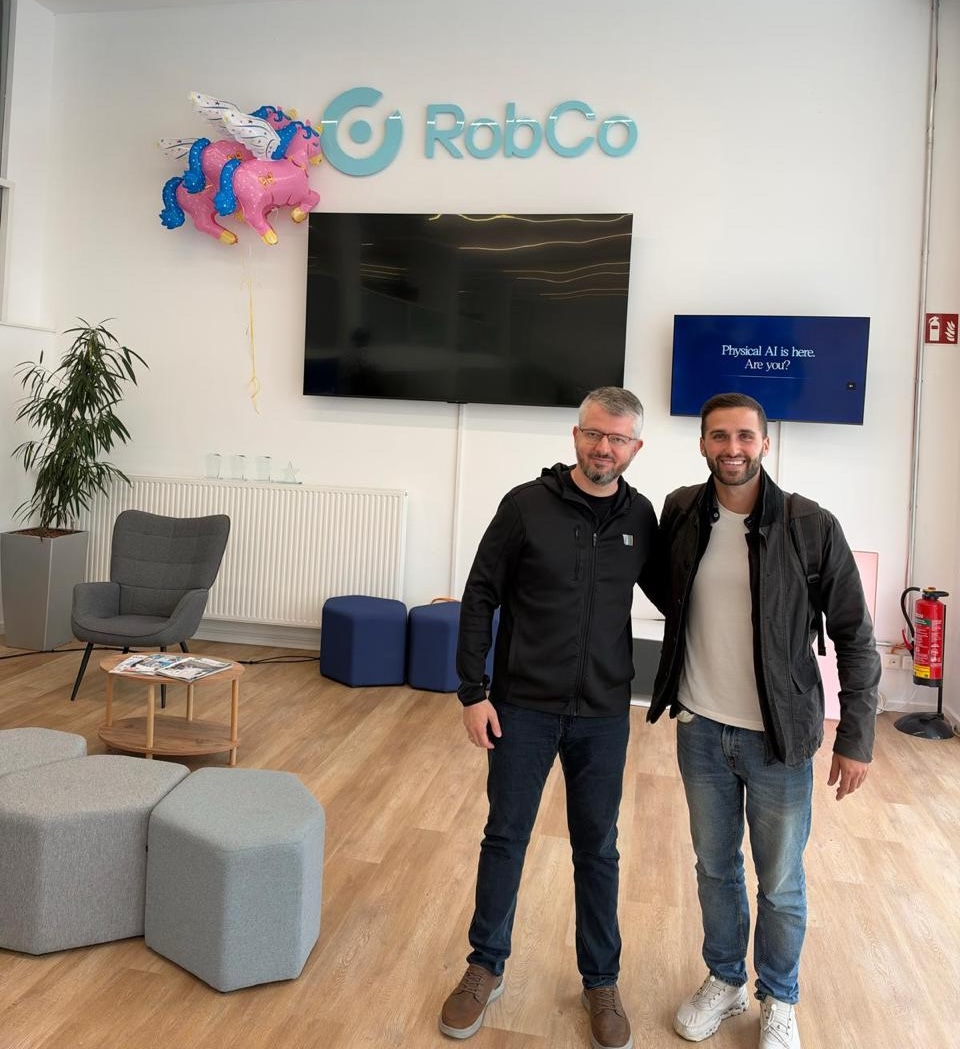
Josh Trup with CTO Michael Aronzon
The company now has the customers, the fleet, the data, the US footprint and the product to move from flexible automation to autonomous industrial robotics. That's why we're investing again.
Congratulations to Roman, Paul, Constantin and the entire RobCo team. We're proud to keep building with you.